
Kapitel 3
ECONOMY AND PRODUCTION CYCLES
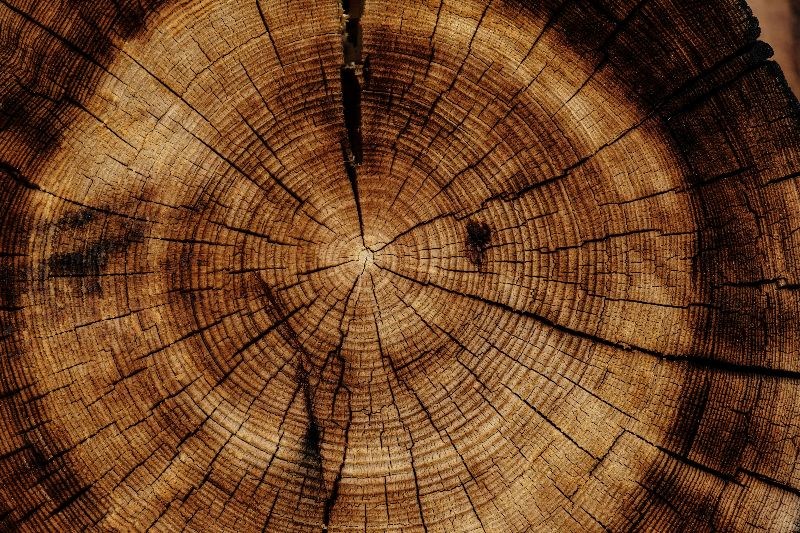
The cycle of nature:What withers in autumn is transformedback into humus by soil organisms,so that healthy, nutrient-rich fruitscan ripen again the following year.
3.A) THE EXTRACTION OF RAW MATERIALS
All raw materials are sourced in a respectful manner, with an awareness of the impact on the Earth, her soils, her waters, her air, her plants, animals and local communities.
When cultivating plants, we continuously build up the humus layer through organic and sustainable soil and field management.
Wild plants are harvested in such a way that their reproduction and natural roles in the respective ecosystem are guaranteed.
Animals are valued as sentient beings and treated with care.
When extracting non-renewable raw materials such as rare earths, stones, salt, gas, oil or metals, the local biodiversity is largely preserved.
At the same time, renaturation measures are implemented in such a way as to increase species diversity and biodiversity.
Water is always returned to the water cycle in a purified and revitalised state.
.
3.B) PRODUCTION CYCLES
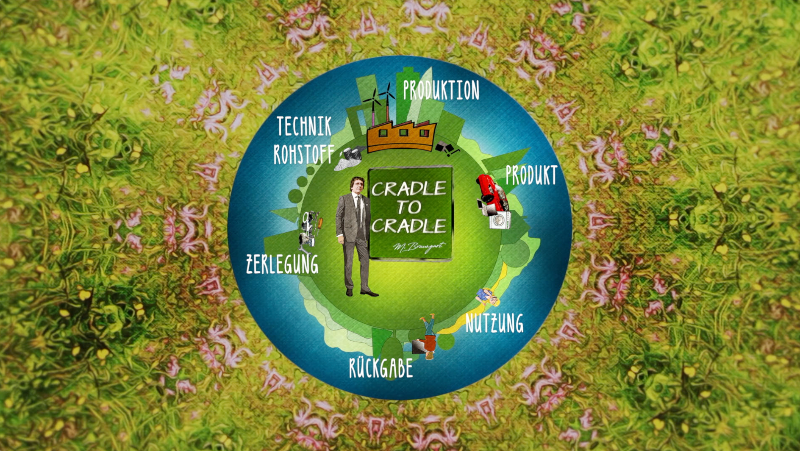
Inspired by natureand the cradle-to-cradle principle,what was once considered wastebecomes a nutrient for new production cycles.
Our clothing is of high quality and made from natural, renewable and durable materials such as hemp, linen, wild silk and nettles. Everyone can find their own individual style. There is no longer such a thing as constantly changing fashion trends.
The majority of our textiles are also made from natural, renewable, local raw materials such as flax, hemp, wool and nettlefibre.
Worn-out clothing and old textiles are recycled into carpets or upholstery fabrics.
Naturally pure textiles can be composted.
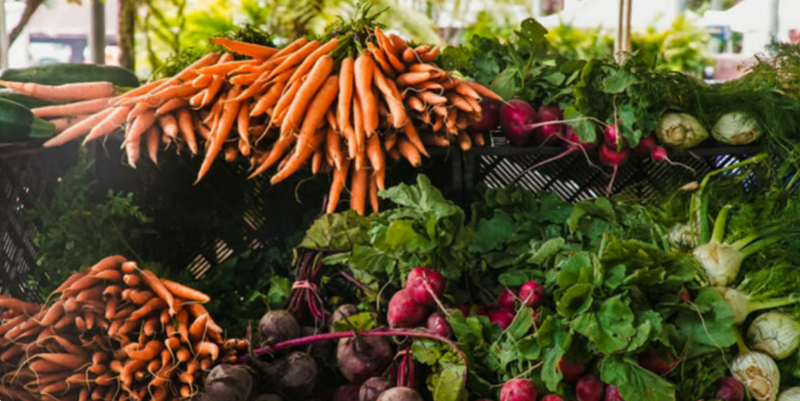
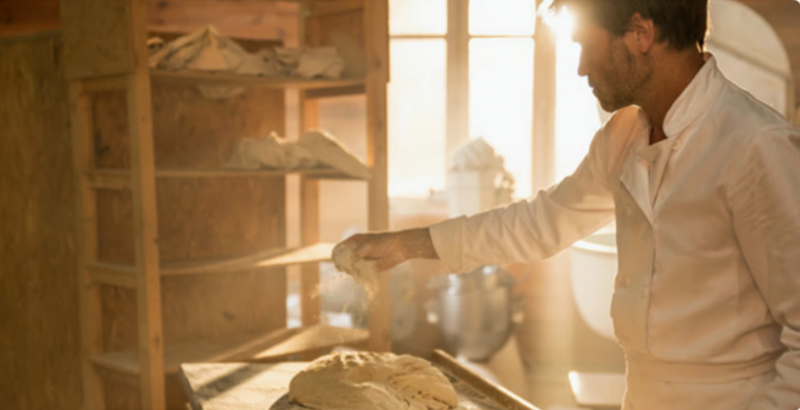
Food is mainly produced regionally and, wherever possible, in consultation between farmers and their customers, so that there are hardly any surpluses.
Food that cannot be sold is made available to people or animals or composted and thus returned directly to the earth's cycle.
.
Consumer goods such as cleaning products, shampoos and personal care products, along with their packaging, are generally made from naturally renewable raw materials – and often produced in-house. Not only are they compatible with the ecosystems they enter, but they also serve as fertiliser for new plants.
Durable goods such as cars, machines and computers are manufactured to be long-lasting and repairable from so-called ‘technical nutrients’. At the end of their service life, new devices are manufactured using a recycling process that has been carefully designed to protect people and nature.
Houses and buildings are constructed from sustainable and, where possible, regional materials that can be returned to the earth or reused at the end of their useful life. Pipes and cables are laid in such a way that they can be easily removed, reused or recycled.
.
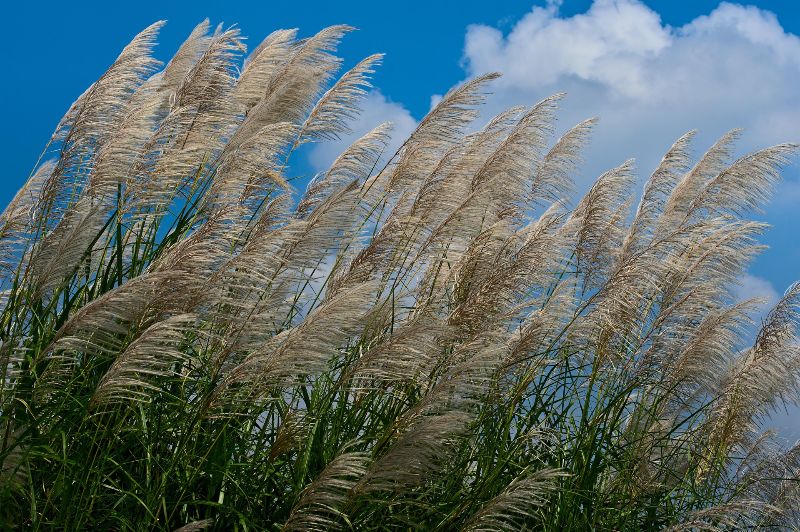
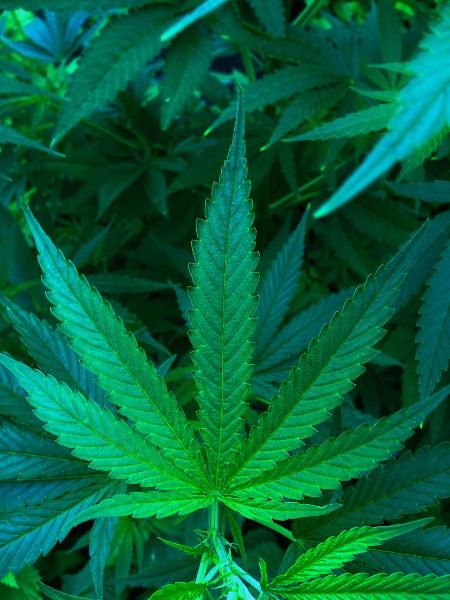
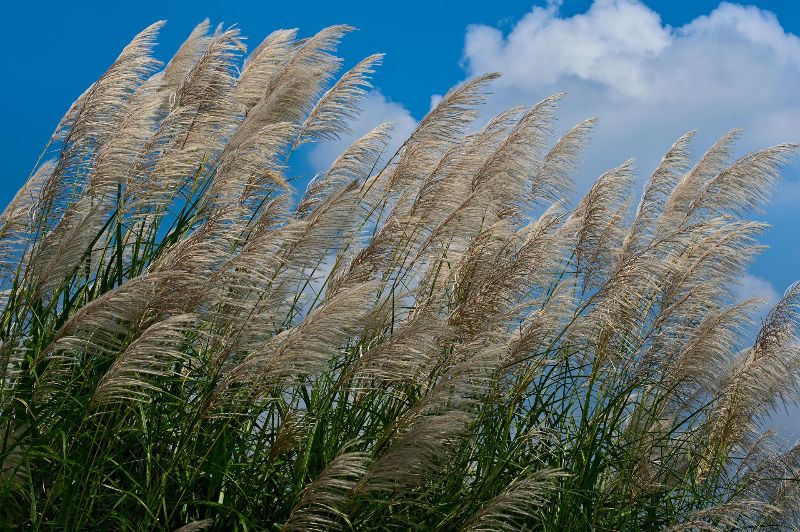
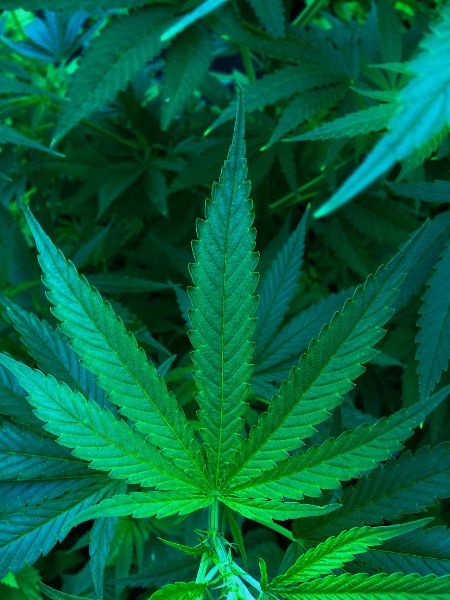
The cultivation and use of ecologically valuable crops such as hemp, flax, straw, miscanthus and algae, as well as lignin waste from the timber industry, have replaced artificially produced, petroleum-based plastics and other harmful synthetic materials.
3D printers enable the production of objects from fungi, lignin and plant fibres.
Not only are various household products, toys, house insulation, plaster, window and door frames, flower pots, paper and cardboard made from these materials, but even car and aeroplane bodies. And they are highly valued for their diverse qualities.
And the ingenious thing is that after use, these materials can be recycled or composted and thus serve as fertiliser for new raw materials.
For this reason, also all colours are made from raw materials that can be safely returned to the natural cycle.
We reflect on the wisdom of our ancestors and learn from childhood to make our own food, personal care and cleaning products from natural ingredients.
The production and use of things is generally based on what is known in permaculture as the ‘5R principle’:
1.R-efuse / refuse!
2.R-educe!
3.R-use!
4.R-epurpose!
5.R-ecycle!
Scientists work hand in hand with practitioners and producers.
The goal is to be ‘ecoligent’ [1].
The ecological footprint is declared on the product labels. In particular, this makes it transparent what the materials are made of, how fairly they were produced and how durable they are.
[1] The word is a combination of the terms ‘ecological’ and ‘intelligent’ in the sense of: ecologically valuable, culturally intelligent. Ecological intelligence is when the results and findings of ecological research and spiritual awareness lead to concrete social applications that guarantee the general right to existence of all living beings (humans, animals, plants). The prerequisite for this is the regional provision of the basic resources of human life:
🌿 pure drinking water
🌿 healthy food
🌿 renewable raw materials
🌿 living space
🌿 renewable energy sources
🌿 post-fossil fuels
.
3.C) DURABILITY OF CONSUMER GOODS
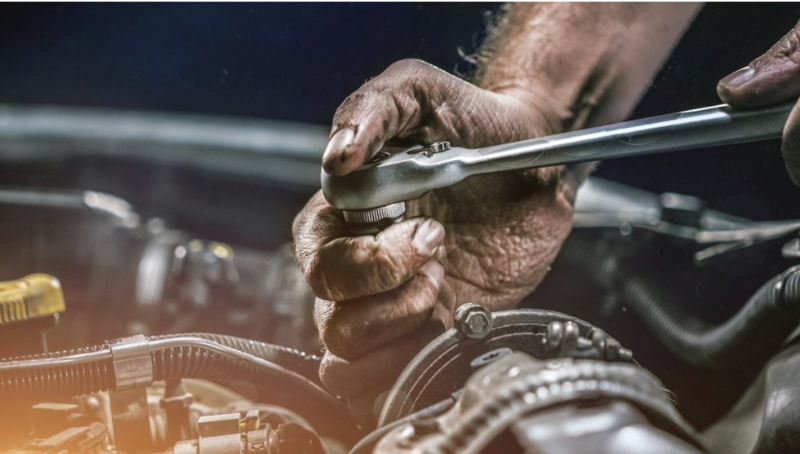
Machines and devices aredesigned and manufacturedto last for decadesand be easy to repair.
Nature's brilliant solutions serve as an inspiring model.
Any skilled craftsman can repair these devices using the instructions provided by the manufacturer.
In our widespread “repair cafés,” talented people repair everyday objects.
There, you can also learn different techniques for repairing, upgrading, or repurposing things yourself.
3.D) WE LOVE CRAFTSMANSHIP
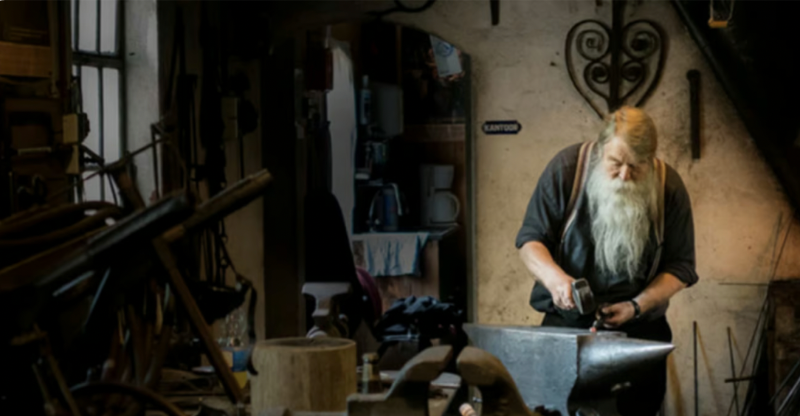
Instead of industrially mass-produced goods, we are once again surrounding ourselves with handcrafted products.
These have a longer life expectancy and are largely made of reusable materials.
What's more, you can sense the person behind the craftsmanship.
This restores an appreciative relationship with the objects we surround ourselves with.
Ancient crafts, especially those from the farthest corners of the earth, have been digitally archived and used to develop practical instructions.
For example, Northern European designers can now learn weaving techniques from Egyptian oases.
Or they can travel to these oases to learn the techniques from the local people or even have products made there directly.
3.E) PACKAGING
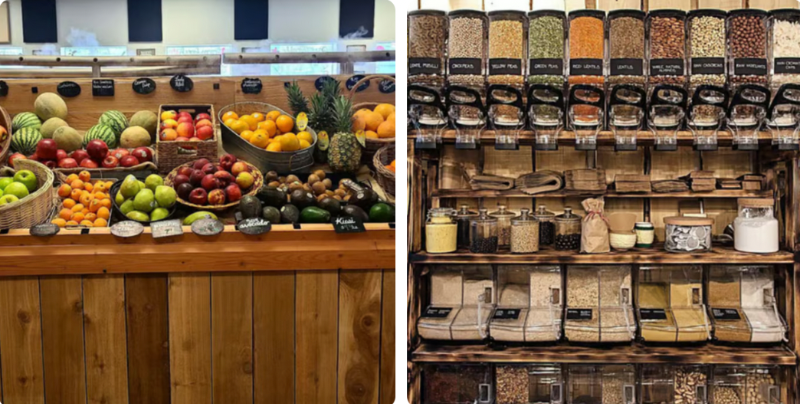
Producers deliver their products to stores in refillable bulk containers, where customers fill their own jars, cloth bags, paper bags, or boxes.
This packaging is available in every store, so you can also shop on impulse.
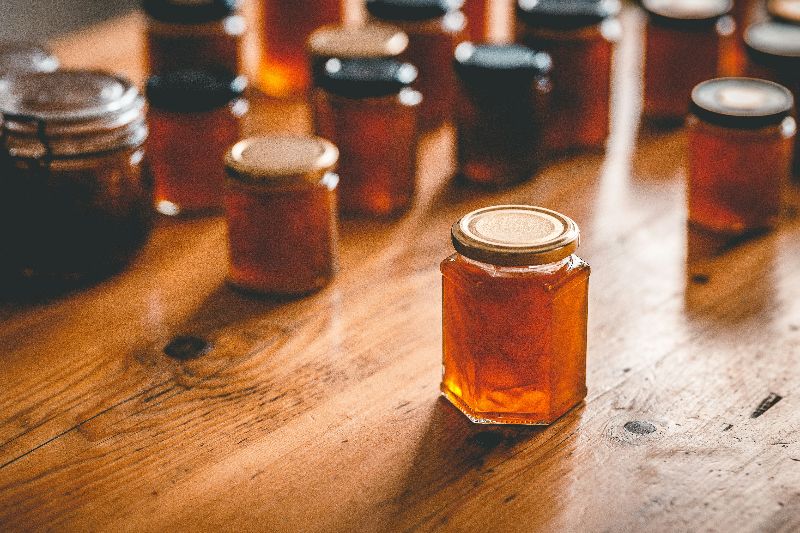
Liquids in bottles or food in jars that would be damaged by this filling process are sold in returnable containers.
Packaging materials such as jars or bottles are reusable or recyclable, and crates or paper bags are compostable after repeated use. Damaged or used bioplastic containers are also composted.
Transport packaging is reusable. Once the contents have been unpacked, the packaging and fillers are returned to the transport companies, which then return them to the product manufacturers so that they can be reused.
Envelopes are compostable.
Out of consideration for the trees, brochures are now only produced digitally and can be viewed by people who want to live computer-free in the community centers of green villages and towns.
When we give gifts, we use bags made of durable paper or beautiful fabrics that can be reused for years. And in this way, we also gift our trees—with their lives.
3.F) WE SUPPORT OUR REGIONAL MANUFACTURERS
We loveshopping in our neighbourhoodand cultivating friendly, symbioticrelationships.
There are shops everywhere selling mainly local and regional products.
In rural areas and cities, shopping communities are forming that obtain their products directly from artisans, producers, and organic farms in the region.
Computer apps help to locate producers of specialties and organize communal deliveries.
We support our regional manufacturers by no longer buying or importing products that can be produced in sufficient quantities in our region or country.
.
Since we stopped buying or importing anything from producers who exploited people, animals, and nature, who used genetically modified seeds or field toxins, these people are now also producing organically and sustainably.
.
3.G) RENEWABLE AND SUSTAINABLE ENERGY
The best energy policy consists of energy-saving measures and increased energy efficiency.
Every village, community, and neighborhood can be self-sufficient in renewable energy. They use regional energy sources such as solar power, hydroelectric power, tidal power, and wave power.
Almost all buildings are self-sufficient in electricity and feed surplus energy into the regional power grid. Solar tiles are standard, and vertical wind turbines are part of every house roof.
Patents for suppressed technologies and inventions that contribute to solving energy problems and healing people and the earth, such as “free energy” or “artificial photosynthesis,” have been made available to humanity. These technologies are also being intensively researched and further developed at universities.
.

3.H) ENVIRONMENTALLY FRIENDLY TRANSPORT
Our public transport networks are well developed, reliable, and easily accessible to everyone. The vehicles run emission-free on energy from renewable sources. They are available to everyone free of charge.
Green parking garagesgenerate energy from solar and wind power. They offer a well-developed charging infrastructure and direct connection to the public grid. Here, people can conveniently switch between different modes of transportation.
The bike paths are wide, safe, and well-lit. They connect the city and the countryside into a harmonious network that families, commuters, and travelers alike can use. This is complemented by numerous car-sharing and bike-sharing initiatives.
We also focus on the region in terms of reducing traffic.
We produce as much as possible locally. Here in our region we find our favorite service providers, our jobs, and the things we need on a daily basis.
This means we need less transportation, save energy, and gain time.
Fewer cars means more space for interaction. Many streets are being transformed into green living spaces where children can play safely and neighborhoods can grow together.
.

3.I) LESS IS MORE
In our new social system, which is responsible towards people and nature, we only buy what we really need. This also applies to physical gifts. We prefer to give gifts that we have made ourselves, into which we have poured our love for the recipient.
The heartfelt “gifts” we enjoy on days of celebration come from our tangible connection with each other and the earth.
Since we have built social networks in our communities, not every household needs to own all the appliances or machines. These are purchased, provided, and repaired by local communities.
3.J) THE GOAL OF COMPANIES
The primary goal of a company is not profit,but rather the genuine satisfaction of customer needs,the happiness of employees,and the sustainable health of the planet.
Companies are run by people who work together cooperatively, pursue the same vision and maintain good and respectful relationships with their customers, suppliers, other partners and each other.
They have one thing in common – they enjoy their work and feel compassion for their fellow human beings, all living creatures and Mother Earth. They treat each other as equals and focus on trust-building measures. They develop and optimise their work processes so that they become more efficient and truly sustainable.
They respect the individual characteristics of each person and take these into account in their overall planning.
Hierarchy in the traditional sense no longer exists. There are different areas of responsibility. Everyone participates in the success. As long as there is still money, the amount of participation is agreed upon collectively.
The pursuit of external growth has transformed into a pursuit of inner growth.
.
3.K) ECONOMY BASED ON FRATERNITY
The economy is based on fraternity with all life.
It serves the purpose of concrete exchange.
Instead of artificially creating nonsensical needs, it serves to satisfy true needs.
Companies and entrepreneurs see themselves as symbiotic partners.
They act for mutual benefit, for the good of all living beings and for the preservation of the Earth's valuable ecosystems.
The people of a place use pastures, tools or other goods communally, for example, according to the commons principle. In doing so, communal responsibility is clearly regulated and good communication is maintained.
Wherever possible, barter is practised.
In the economy the principles of the ‘ECONOMY OF LOVE’ are applied:
This involves balancing the four dimensions of society, economy, culture and environment:
The economy ensures the fair creation and distribution of value for all interest groups.
External costs, production practices and impacts on society and the environment are presented transparently.
In the area of culture, lifelong learning, well-being and creative engagement with each other and the community are promoted.
In the area of society, fair and humane working conditions are promoted. Every individual should feel safe and respected.
The active regeneration of the environment is promoted through biodynamic agriculture and sustainable production practices.
The four pillars of the ‘WELFARE ECONOMICS’ are applied everywhere:
🌿 Human dignity
🌿 Solidarity and justice
🌿 Ecological sustainability
🌿 Transparency and co-decision
.
Melde Dich an, um zu kommentieren.